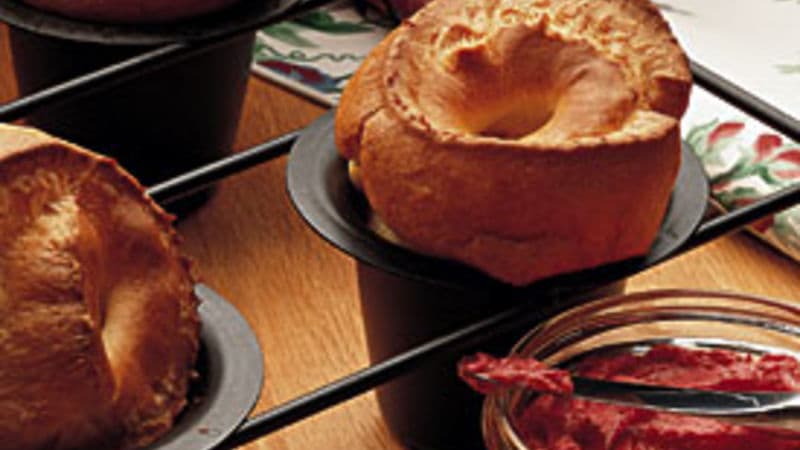
Looking for a recipe that delivers light, airy, and golden-brown popovers every time? This Simple Popover Recipe requires only four ingredients and minimal effort. Enjoy the satisfying crunch of the exterior and the soft, eggy interior of these delightful pastries. Perfect for butter and jam at breakfast or topped with whipped cream for dessert, these versatile popovers are sure to be a hit. Discover how simple it is to bake these classic treats!
Here's a breakdown of the main ingredients in this Simple Popover recipe and why they are important.
Eggs: Eggs provide structure, richness, and leavening. The moisture from the eggs contributes to steam, which is essential for creating the popover's signature puff.
All-Purpose Flour: Flour provides the main structure of the popovers. When mixed with liquid, the gluten in the flour develops, creating a network that traps air and steam. This allows the popovers to rise.
Milk: Milk adds moisture to the batter, which is crucial for creating steam during baking. The steam is what causes the popovers to puff up and become light and airy. Milk also contributes to the overall flavor and richness of the popovers.
Salt: Salt enhances the flavor of the other ingredients and also helps to control the gluten development in the flour. This prevents the popovers from becoming too tough.
You will be surprised at how easy it is to make these Simple Popovers. See the recipe below for all the details.
A hot oven is essential for creating the initial burst of steam that makes popovers rise. Generously grease a 6-cup popover pan or six (6-oz) custard cups with shortening or butter. Thorough greasing prevents the popovers from sticking and allows them to climb up the sides of the pan. Make sure to grease all the way to the top.
Lightly beat 2 large eggs with a fork or whisk. Add the remaining ingredients and beat together just until smooth. Avoid overmixing the batter. Overmixing develops too much gluten, which can result in tough popovers. A few lumps are okay.
Fill each popover cup about 1/2 full with the batter. Bake for 20 minutes at 450°F. Do not open the oven door during this initial high-heat baking period. Opening the door can cause the popovers to collapse. Reduce the oven temperature to 350°F and bake for an additional 15 to 20 minutes, or until the popovers are deep golden brown. Lowering the temperature allows the popovers to cook through and set without burning.
Immediately remove the popovers from the pan and serve warm.
Make sure to allow the popovers to cool completely before storing them in an airtight container.
Store for up to two days.
Store up to 2 to 3 months. Thaw the popovers in the refrigerator or at room temperature before reheating.
To restore some crispness, reheat in a preheated oven at 350°F for 5 to 10 minutes to crisp them up.

Heat oven to 450°F. Generously grease 6-cup popover pan or six (6-oz) custard cups with shortening.
Beat eggs slightly in a medium bowl with a fork or whisk. Beat in remaining ingredients just until smooth (do not overbeat).

Fill popover cups about 1/2 full. Bake 20 minutes.

Reduce oven temperature to 350°F. Bake 15 to 20 minutes longer or until deep golden brown. Immediately remove from pan. Serve warm.
Serve with honey butter, fruit-flavored cream cheese, whipped cream, or ice cream for a delectable dessert.
| Food Component / Nutrient | Amount | % , Daily Value* |
|---|---|---|
| Total Fat | 3 g | % Value Not Available |
| Saturated Fat | 1 g | % Value Not Available |
| Cholesterol | 75 mg | % Value Not Available |
| Sodium | 240 mg | % Value Not Available |
| Total Carbohydrate | 18 g | % Value Not Available |
| Dietary Fiber | 1 g | % Value Not Available |
| Protein | 6 g | % Value Not Available |
| Vitamin D | Value Not Available | 6% |
| Calcium | Value Not Available | 6% |
| Iron | Value Not Available | 6% |
| Potassium | 110 mg | % Value Not Available |
| Vitamin A | Value Not Available | 4% |
| Vitamin C | Value Not Available | 0% |
| Folic Acid | Value Not Available | 4% |
*The % Daily Value (DV) tells you how much a nutrient in a serving of food contributes to a daily diet. 2,000 calories a day is used for general nutrition advice. | ||